📚 The Renewal of Seas Every 165 Years
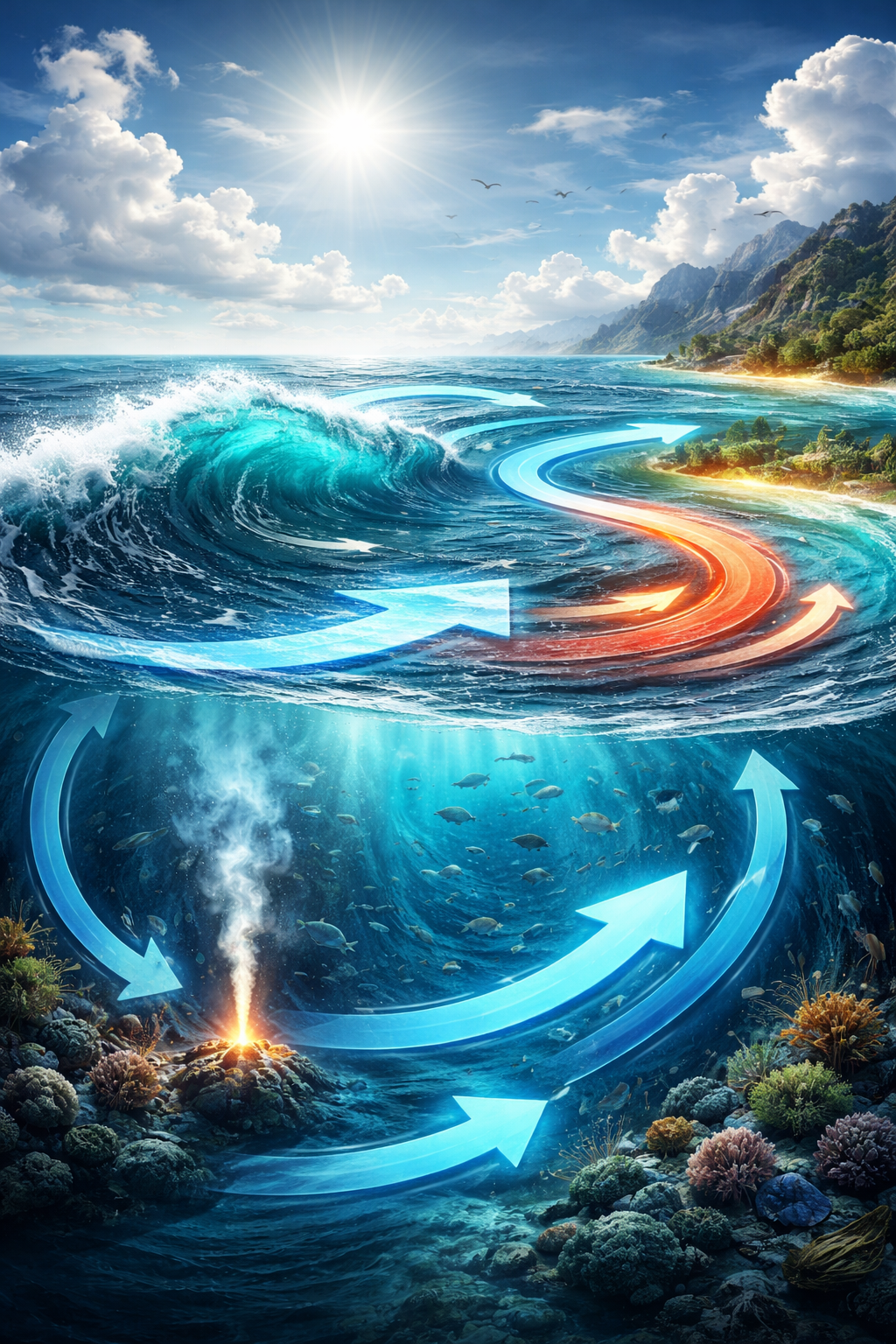
Seawater is renewed according to the circulation of the Arctic Ocean, where ocean waters undergo complete renewal approximately every 165 years. During this process, water masses are redistributed among the seas, replacing older waters with those from other seas.
What characterizes oceanic movements is their constant turbulence and motion. Therefore, seas undergo renewal through complex processes that correspond to the marine environment responsible for these interactions.
In addition, the presence of salts resulting from the flow of river waters and floods—which washed the land of salts in ancient eras before the existence of humans—is also considered a factor related to renewal and, in one way or another, a contributor to it.
The temperature of seawater varies due to two main sources:
🔴 Heat from the Earth’s interior
🔴 Heat from the Sun, in addition to other sources resulting from the decay of radioactive elements, volcanic eruptions, heat emitted by marine organisms, and the pressure of water masses at great depths.
Vertical and horizontal temperature differences are considered an enhancement of horizontal and vertical separation layers (barriers) between water masses formed due to differences in salinity. Variations in salinity and temperature play an important role in the horizontal and vertical movement of seawater and oceans, through which water currents flow within and between seas, separated by barriers—divisions that do not transgress upon one another
.
